
Noon is the Gulf’s homegrown marketplace giant — and for many Saudi shoppers, it’s the default app. Selling there puts your products in front of Noon’s traffic from day one, in exchange for commissions and playing by Noon’s rules. This guide covers, from Noon’s own seller resources, who can register in Saudi Arabia, what it costs, how fulfilment works, and how to decide between Noon, Amazon.sa and your own store.
Who Can Sell on Noon in Saudi Arabia?
Noon sells in the UAE, Saudi Arabia and Egypt, and registers sellers per market. For Saudi Arabia, the seller account is built for registered businesses: expect to provide your Commercial Registration (trade licence), VAT details where applicable, and a bank account in the business’s name for payouts. Individual, unregistered selling is not the model — if you don’t have a CR yet, that’s step zero (our pillar guide walks the setup sequence; foreign founders follow the MISA route in our expat setup guide).
Noon also runs cross-border programmes in the region, but a Saudi-based store selling to Saudi customers should register as a Saudi seller — local registration is what unlocks local fulfilment and payout terms.
What It Costs: Commissions and Fees
Noon’s pricing is commission-led:
- Referral/commission fee per sale — a percentage that varies by category. Noon’s official KSA fee schedule (the Fulfilled by noon (FBN) fees in KSA schedule in Noon’s Seller Help Center) lists referral fees from 4% to 27% depending on what you sell — for example 4% on SIM cards up to 27% on fashion apparel and footwear, with a minimum referral fee of SAR 1 per item (verify the current official fee schedule in Noon’s seller resources before you price — category fees change).
- Fulfilment fees if you use Fulfilled by Noon (FBN) — storage + pick/pack/delivery charges on top of commission.
- No big upfront listing cost is Noon’s usual model — the meter runs when you sell, which is why marketplaces feel cheap to start and expensive at scale.
Price with the full stack in view: product cost + commission + fulfilment/shipping + returns. A product that’s profitable in your own store can be a loss-maker on a marketplace if you copy the same shelf price across.
Fulfilment: FBN vs Your Own Shipping
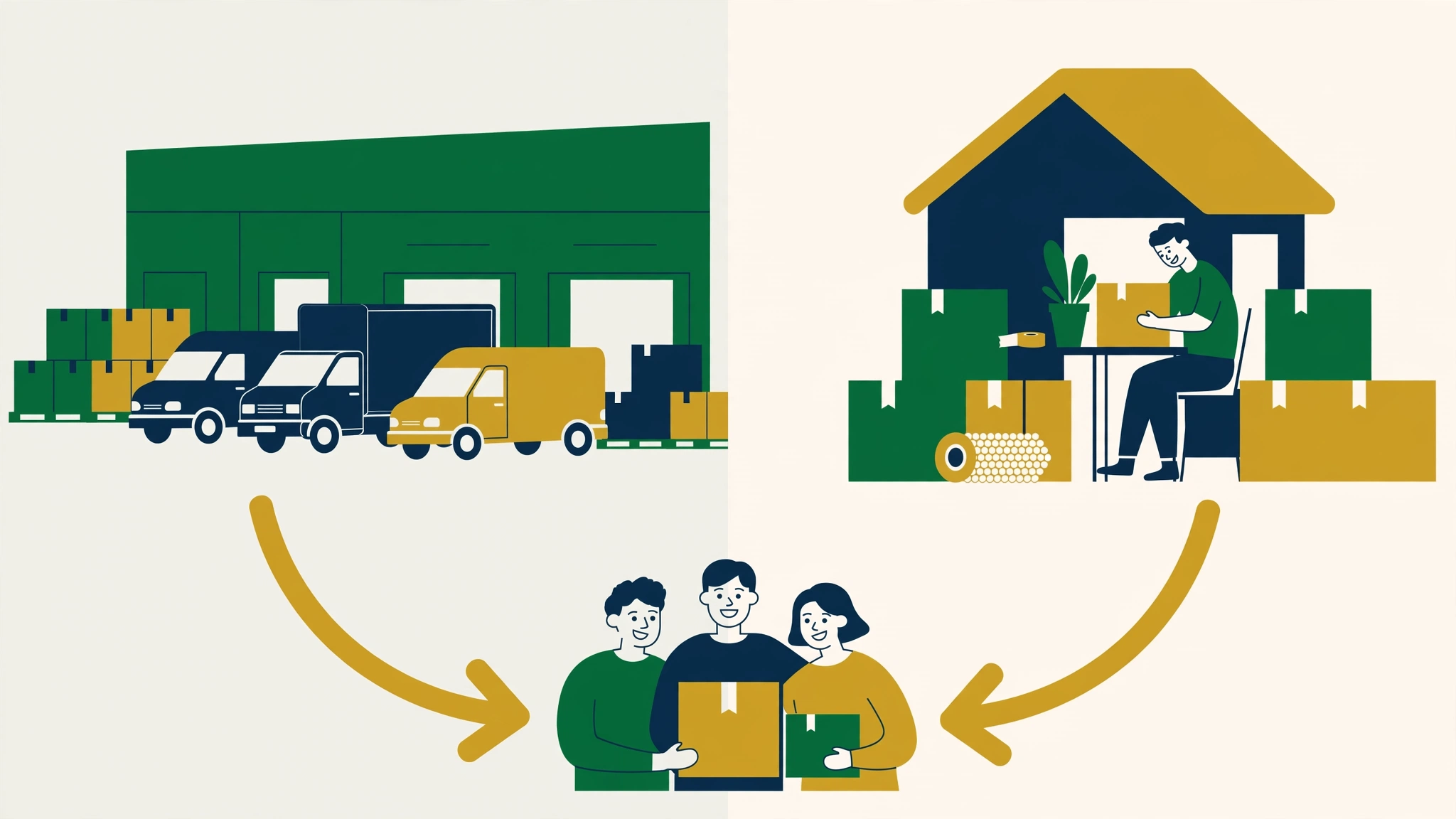
- Fulfilled by Noon (FBN): you send stock to Noon’s fulfilment centres; Noon stores, packs, delivers and handles much of the customer-facing logistics. Faster delivery badges and less operational work — for fees, and with your cash tied up in their warehouse.
- Seller-fulfilled (Fulfilled by Partner, FBP): you store and ship orders yourself (directly or via your courier), keeping control and margin, carrying the delivery experience yourself.
Most new sellers start seller-fulfilled to test demand, then move proven sellers into FBN where the delivery speed converts better. (Amazon.sa’s FBA decision is the mirror image of this one.)
Getting Set Up (The Sequence)
- Entity first: CR in place, VAT position clear, business bank account open.
- Register as a seller through Noon’s seller onboarding with your business documents.
- Set up payouts and tax details exactly as registered — mismatched names/IBANs are the classic payout delay.
- List products to Noon’s catalogue standards: clean images, Arabic + English titles/descriptions done properly (Noon’s Saudi audience shops heavily in Arabic), correct category and attributes.
- Choose fulfilment per product, price with fees included, and watch Noon’s seller performance standards (dispatch times, cancellations, returns) from the first order — marketplaces throttle sellers who miss them.
Noon vs Your Own Store (The Honest Trade-Off)
Noon rents you demand: instant traffic, built-in trust, no ads needed to be seen — for a percentage of every sale, zero customer data, and total dependence on their algorithm and policies. Your own store (Salla/Zid/Shopify) is the opposite: no commission, you own the customer relationship, but you must generate every visit yourself. Serious Saudi brands usually end up on both: marketplace for discovery and volume, own store for margin and repeat customers. Our platform comparison scores the own-store options; the strategy question is order, not either/or.
FAQs
Can I sell on Noon with a freelance permit?
Noon’s seller registration is built around registered businesses with a trade licence/CR. A freelance permit is not a trading licence for goods — see the setup routes in our pillar and expat guides.
Can a foreign-owned Saudi company sell on Noon?
A Saudi-registered company (including MISA-licensed foreign-owned) sells as a Saudi business. Cross-border arrangements are separate programmes with their own terms.
How and when does Noon pay sellers?
Payouts go to the registered business bank account on Noon’s settlement cycle, net of commissions and fees — confirm the current cycle in the seller resources when you register.
Requirements, commissions and fulfilment terms verified against Noon’s official seller resources at writing; marketplace terms change frequently — confirm the live fee schedule before pricing. Researched guide; not sponsored by Noon.
Related Guides
- How to Start an Ecommerce Business in Saudi Arabia (2026 Guide)
- How to Set Up an Ecommerce Company in Saudi Arabia as a Foreigner: MISA, CR & Costs (2026)
- Salla vs Zid vs Shopify vs WooCommerce: Best Platform for a Saudi Store in 2026?
- Best Payment Gateways in Saudi Arabia for Online Stores (2026)
- Amazon.sa vs Noon vs Your Own Store: Where Should a Saudi Seller Sell in 2026?
- How to Price Products in Saudi Arabia: The Full SAR Cost Stack + Worked Example (2026)
2 thoughts on “How to Sell on Noon Saudi Arabia: Seller Requirements, Fees & Fulfilment (2026)”
Comments are closed.